Why Mineral Sunscreen Leaves a White or Purple Cast (And How to Actually Fix It)
Quick Answer: White or purple cast comes from zinc oxide and titanium dioxide particles sitting on top of skin rather than blending in — using too little product to compensate for the cast (backwards logic), applying in one thick layer instead of thin buildable ones, and skipping a tinted or physical-blend formula on deeper skin tones are the main causes. Warm the product between fingers first and apply in thin layers, building coverage gradually.
You bought mineral sunscreen specifically because it’s gentler and effective, and now you’re stuck deciding between sun protection and looking like you forgot to blend in a mask. The cast is real, but it’s mostly an application problem, not an unavoidable trade-off.

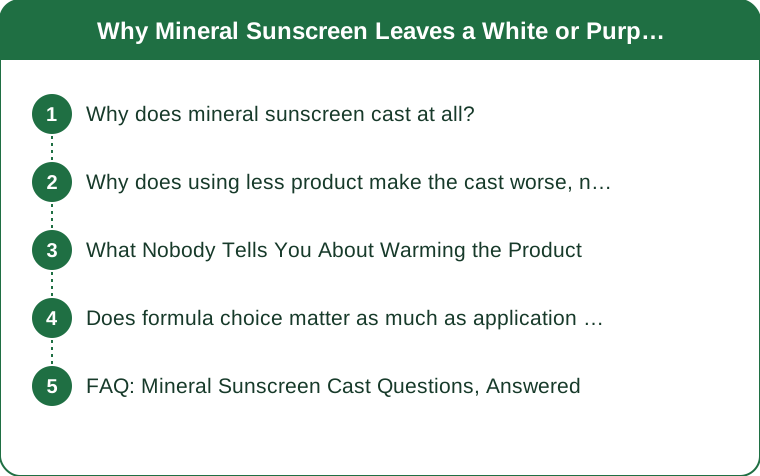
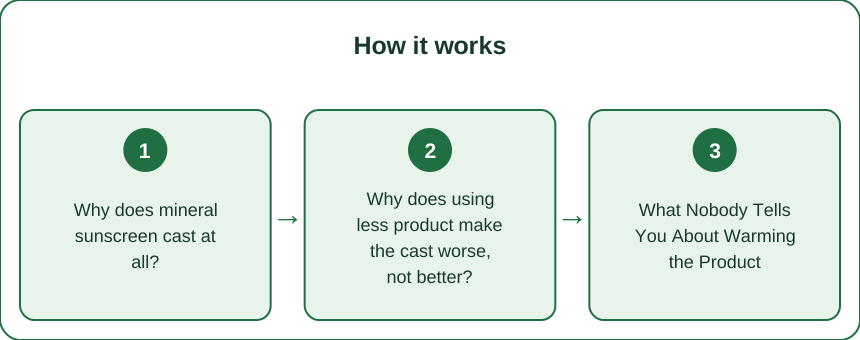
Why does mineral sunscreen cast at all?
Mineral active ingredients (zinc oxide, titanium dioxide) work by physically sitting on the skin’s surface and reflecting UV light, unlike chemical filters that absorb into skin. That surface-sitting mechanism is exactly what makes them effective and gentle — and exactly what causes the visible cast, especially on medium-to-deep skin tones where the white particles contrast more visibly.
The cast isn’t a flaw in the product; it’s a direct consequence of how mineral protection physically works.
Why does using less product make the cast worse, not better?
This is the counterintuitive part: thin, uneven application concentrates particles in visible patches rather than distributing them evenly. A too-thin layer often looks patchier and more obviously cast-y than a proper, fuller amount applied correctly.
The real fix isn’t less product — it’s the right amount (about a quarter-teaspoon for the face) applied in thin, buildable layers rather than one thick swipe, letting each layer set for 30-60 seconds before adding more.

What Nobody Tells You About Warming the Product
Warming sunscreen between your fingers for 10-15 seconds before applying changes its consistency meaningfully — cold, straight-from-the-tube mineral formulas are thicker and harder to blend evenly, which directly increases visible cast.
This single step, skipped by most people, is responsible for a surprising amount of the ‘this formula casts badly’ complaints — the same product often blends dramatically better once warmed first.
Does formula choice matter as much as application technique?
Yes, particularly for medium-to-deep skin tones: newer micronized or tinted mineral formulas use smaller particle sizes and iron oxide tinting specifically engineered to reduce cast on a wider range of skin tones, compared to older, larger-particle mineral formulas.
If application technique alone isn’t solving it, the formula itself may be built for lighter skin tones by default — a tinted mineral or hybrid mineral-chemical formula often solves what technique can’t.
FAQ: Mineral Sunscreen Cast Questions, Answered
Does mineral sunscreen cast fade throughout the day?
Somewhat — as it settles and blends with natural oils, but a poorly applied thick layer won’t fully disappear; proper thin-layer application prevents needing it to ‘fade’ at all.
Is chemical sunscreen a better option to avoid cast entirely?
It avoids the cast issue, but isn’t right for everyone — some people prefer mineral for sensitivity reasons. A hybrid formula often balances both concerns.
Why does the cast look worse in photos than in the mirror?
Camera flash and certain lighting reflect off the mineral particles more visibly than ambient light does, which is why cast can look more obvious in photos than it feels in person.
TL;DR:
- Cast comes from the same surface-reflecting mechanism that makes mineral sunscreen effective
- Use the full recommended amount (quarter-teaspoon for face) in thin, buildable layers — not less
- Warm the product between fingers for 10-15 seconds before applying to blend more evenly
- Tinted or micronized mineral formulas reduce cast significantly on medium-to-deep skin tones
The cast is an application and formula-match problem, not an unavoidable cost of mineral protection — fix the technique before switching products.
Keep Reading
This article is for general informational and styling purposes only. Fit, sizing, and product availability may vary.