The Sunscreen Guide: Everything Women Actually Need to Know About SPF
Dermatologists agree on almost nothing as unanimously as this: sunscreen is the single most effective anti-aging and skin-cancer-prevention product ever made — and it is also the most incorrectly used, with most people applying a quarter of the tested dose and reapplying approximately never. In peak July sun, the confusion has real costs. Here is the complete guide: the numbers demystified, the formats sorted, the honest application math, and the system that makes daily SPF automatic.

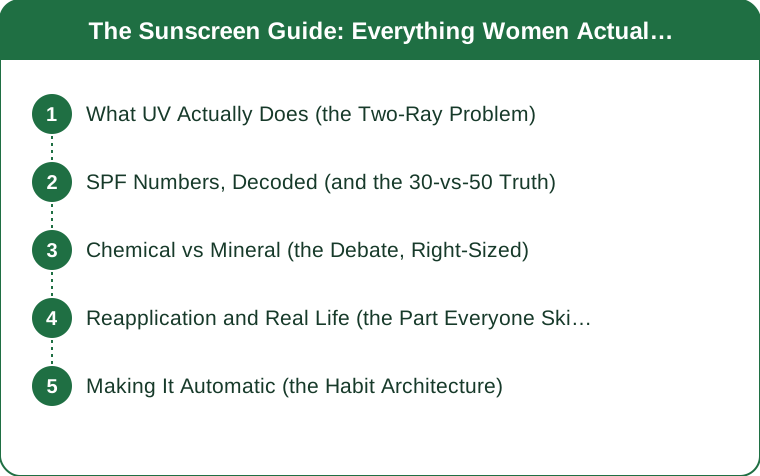
What UV Actually Does (the Two-Ray Problem)
The tan-and-burn briefing: UVB rays burn — surface damage, the sunburn ray, the primary skin-cancer driver; UVA rays age — penetrating deeper, degrading collagen year-round, through clouds and car windows (the documented driver’s-side aging asymmetry is UVA’s calling card). Both contribute to skin cancer, which one in five Americans will face. This is why broad spectrum on a label matters — it certifies UVA coverage alongside the SPF number’s UVB promise — and why sunscreen is a 365-day product with a July intensity peak, not a beach accessory. The tan itself, for the record, is visible DNA damage response. There is no healthy version.
SPF Numbers, Decoded (and the 30-vs-50 Truth)
The math nobody explains: SPF 30 filters about 97% of UVB, SPF 50 about 98% — the returns diminish, which is why dermatologists say SPF 30 minimum, 50 for intense exposure rather than chasing SPF 100 (which mainly buys false confidence). The catch that changes everything: those percentages assume the tested dose — 2mg per square centimeter, roughly a full teaspoon-plus for face and neck, a shot glass for a swimsuit body — and real-world users apply 25–50% of that, turning their SPF 50 into an effective SPF 15. The practical rule: apply generously enough to feel like slightly too much, because that is the tested amount. Underapplied high SPF loses to properly applied SPF 30 every time.

Chemical vs Mineral (the Debate, Right-Sized)
The format question, answered without panic: chemical filters absorb UV and convert it to heat — elegant textures, no white cast, the modern formulations most people prefer daily; mineral filters (zinc oxide, titanium dioxide) sit on skin reflecting and absorbing — the pick for sensitive, reactive and post-procedure skin, and for anyone who simply prefers them, with newer formulas finally taming the white-cast problem (tinted mineral is the deeper-skin-tone solution). The honest verdict: the best sunscreen is the one you will actually apply at full dose daily — texture preference is not vanity; it is compliance strategy. Both families are effective. The debate is 90% marketing theater.
Reapplication and Real Life (the Part Everyone Skips)
The uncomfortable truth: sunscreen degrades with sun exposure and sweat — the two-hour reapplication rule is real for outdoor days, immediately after swimming or heavy sweating regardless of water-resistant labels (which are rated for 40 or 80 minutes, not afternoons). The real-life toolkit: SPF sticks and sprays for over-makeup touch-ups (sprays need embarrassing quantities — spray until sheen, then rub), powder SPF as a midday assist rather than a primary, and the strategy that outranks all reapplication: shade, hats and UPF clothing during the 10am–4pm intensity window. Indoor-desk days need one honest morning application; beach days need the whole system. Match effort to exposure.
Making It Automatic (the Habit Architecture)
Daily SPF survives on friction removal: a facial sunscreen you genuinely like (this justifies actual shopping — texture-testing until one feels like skincare rather than penance), stationed with the toothbrush as the non-negotiable morning bookend, a body pump-bottle by the door for exposed-limb days, one in the car and one in the gym bag (heat degrades formulas over months — replace annually and shade-store). The motivational math, for days discipline flags: sun exposure drives an estimated 80-plus percent of visible facial aging, making the $15 bottle the entire anti-aging industry’s most jealously guarded secret. Every serum you own is playing defense for the sunscreen you skip. Reverse that.
Sunscreen, settled: broad spectrum SPF 30–50, applied at feels-like-too-much dose, reapplied on real outdoor days, in whichever format you will actually use — plus hats and shade when July means business. It is the cheapest product with the biggest skin payoff ever tested, and the entire trick was always dose and daily-ness. Find the formula you like this week. Your skin in twenty years is currently taking notes.
Keep Reading
This article is for general informational and styling purposes only. Fit, sizing, and product availability may vary.