How to Actually Apply Sunscreen Around Your Eyes Without Stinging
Quick Answer: Under-eye stinging usually comes from chemical sunscreen filters migrating into the eye area, not from the under-eye skin itself being unusually sensitive — switching to a mineral (zinc oxide or titanium dioxide) formula for this specific area, applied with a light patting motion rather than rubbing, resolves it for most people.
The under-eye area is one of the most commonly skipped sunscreen zones, and it shows — it’s also one of the first places sun damage becomes visible. The good news is the stinging problem has a specific, fixable cause.
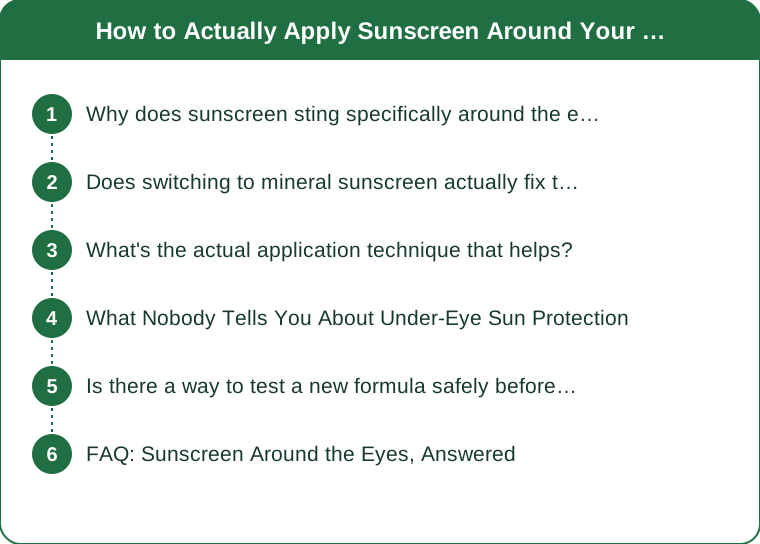
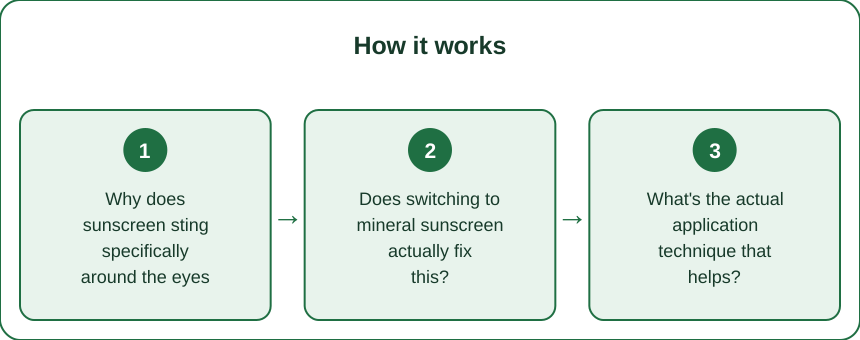
Why does sunscreen sting specifically around the eyes when it doesn’t elsewhere?
Chemical sunscreen filters (avobenzone, octinoxate, and similar ingredients) are more likely to migrate into the eyes through sweat, humidity, or simply the skin’s natural movement, and it’s direct contact with the eye itself — not the surrounding skin — that causes the sting. The under-eye skin is also thinner and has less natural oil barrier than the rest of the face, making it more prone to irritation from fragrance or alcohol in a formula that the rest of your face tolerates fine.
Does switching to mineral sunscreen actually fix this?
For most people, yes. Mineral filters sit on top of the skin rather than absorbing into it, and they’re far less prone to migrating into the eyes with sweat or humidity. Many people who can’t tolerate any sunscreen near their eyes find a dedicated mineral eye-area formula works without issue, even when their regular facial sunscreen stings.
What’s the actual application technique that helps?
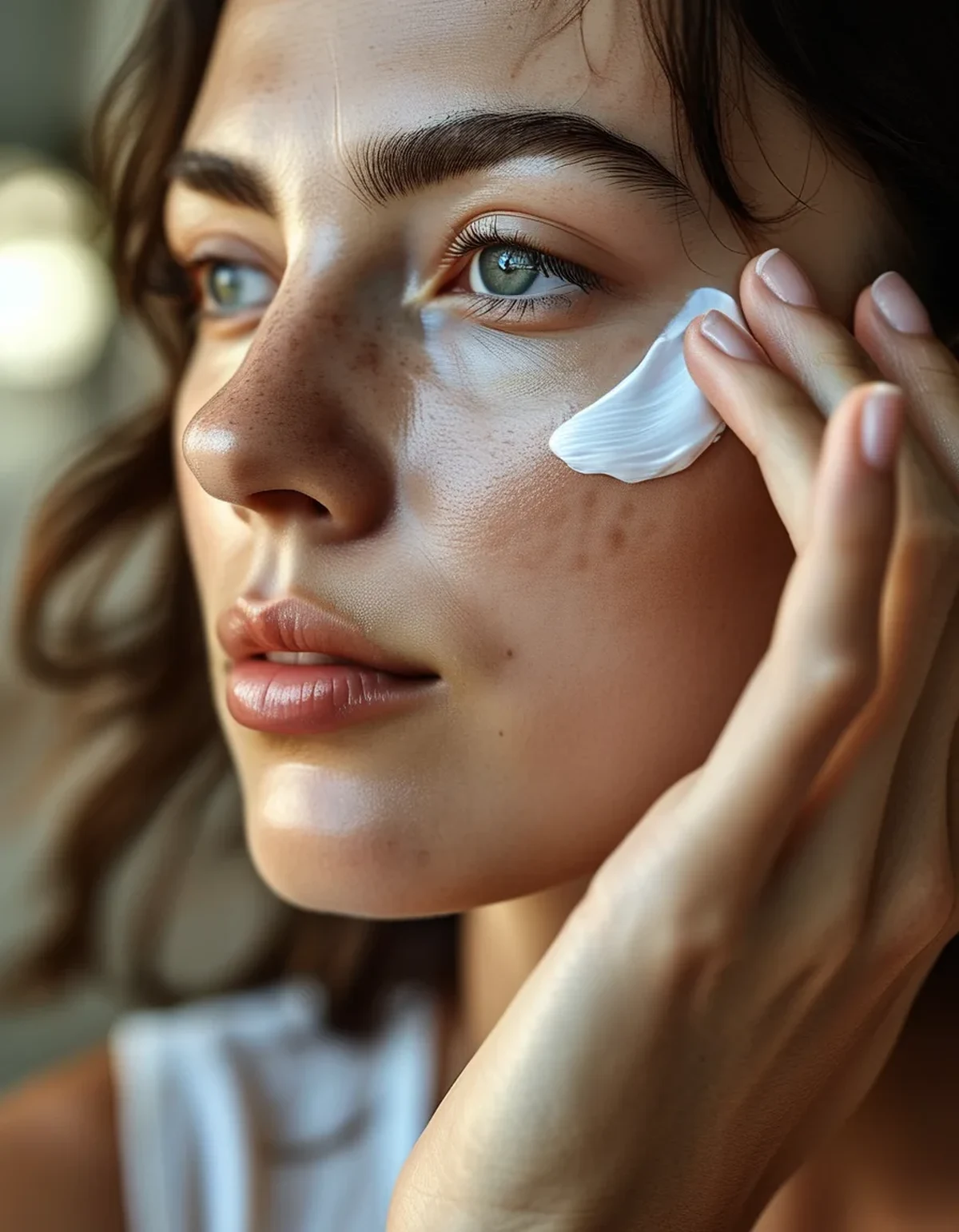
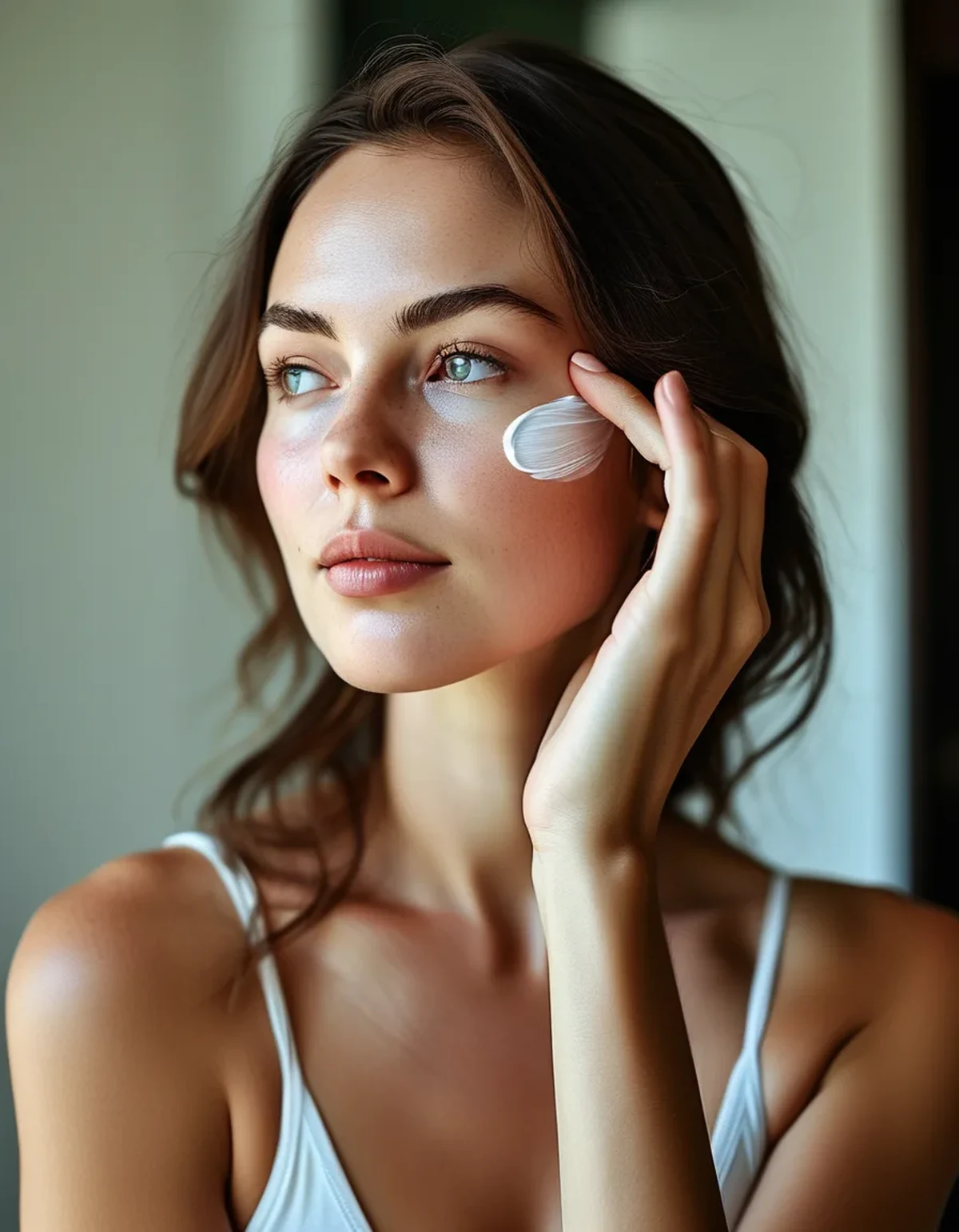
Pat, don’t rub, and apply a very thin layer starting at the orbital bone (the bone around your eye socket), not directly on the eyelid or lash line. Rubbing sunscreen into thin under-eye skin encourages product to travel toward the eye itself through the motion; patting keeps it more localized.
Let your regular facial sunscreen set for a minute or two before applying anything else nearby — applying the eye-area product while the rest of your sunscreen is still wet increases the chance of product migrating across the whole area.
What Nobody Tells You About Under-Eye Sun Protection
A separate, dedicated eye-area SPF product isn’t marketing fluff for most people who struggle with stinging — the formulas are genuinely different, typically lower in fragrance, alcohol, and chemical filters specifically because manufacturers know this area is more sensitive. Sunglasses aren’t a substitute for sunscreen here, but they meaningfully reduce total sun exposure to the area, especially in wraparound or larger-frame styles that block more peripheral light, not just direct light.
The under-eye area shows cumulative sun damage faster than most other facial zones because the skin is thinner — this is part of why consistently skipping it, even from stinging avoidance, has a visible cost over years, not just an immediate one.
Is there a way to test a new formula safely before committing?
Patch test on the inner wrist first for 24-48 hours, then a small test on the under-eye area itself for a few days before full daily use. This catches most reactions before they happen on a visible, sensitive area, and is a low-effort step worth taking for any new eye-area product.
FAQ: Sunscreen Around the Eyes, Answered
Is it safe to use regular sunscreen that close to the eyes at all?
Applied correctly (patted on the orbital bone, not the eyelid or lash line), most sunscreens are safe near the eyes — the stinging issue is about comfort and formula tolerance, not safety.
What if I still can’t find a formula that doesn’t sting?
Prioritize consistent sunglasses use and a wide-brim hat for that area, and keep testing mineral formulas occasionally — tolerance and available formulas both improve over time.
Does makeup with SPF work as a substitute for the eye area?
It can supplement but shouldn’t fully replace a dedicated sunscreen — most SPF makeup doesn’t apply thick or evenly enough on its own to reach labeled protection levels.
TL;DR:
- Under-eye stinging usually comes from chemical filters migrating into the eye, not unusual skin sensitivity
- Mineral (zinc oxide or titanium dioxide) formulas resolve this for most people
- Pat, don’t rub, and apply on the orbital bone rather than directly on the eyelid or lash line
- A dedicated eye-area SPF product is a real, different formula — not just marketing
The under-eye area doesn’t have to stay the one spot you consistently skip — the fix is usually a formula change, not toughing it out.
Keep Reading
This article is for general informational and styling purposes only. Fit, sizing, and product availability may vary.