Why Sunscreen Reapplication Timing Matters More Than SPF Number for All-Day Protection
Buying a higher SPF sunscreen and assuming it means fewer reapplications throughout the day misunderstands what SPF actually measures, since the number reflects a controlled lab application under ideal conditions — not how the product holds up against sweat, water, and rubbing over a real day outside.

Why SPF Measures a Lab Condition That Doesn’t Match Real-World Wear
The lab-versus-real-world gap: the spf-testing-uses-a-specific-thick-application-amount-that-most-people-never-actually-apply (the standard test applying meaningfully more product than a typical real-world application — the spf-tested-at-thicker-application-than-typical), the the-spf-rating-doesnt-account-for-sweat-water-contact-or-rubbing-against-clothing-or-towels (the the number reflecting protection under static, controlled conditions rather than an active day — the spf-doesnt-account-for-real-world-wear), the the-a-higher-spf-number-degrades-under-those-same-real-world-conditions-just-like-a-lower-one-does (the both high and low SPF products losing effectiveness at a similar rate once sweat and friction are involved — the higher-spf-degrades-similarly-under-wear), and the reframe (SPF number describing potential protection under ideal conditions, not actual protection duration during a normal active day).

The Specific Reapplication Window That Actually Maintains Protection
The actual guidance: the reapply-roughly-every-two-hours-regardless-of-spf-number-during-continuous-sun-exposure (the a fixed time-based window being the standard guidance independent of which SPF was originally applied — the two-hour-window-regardless-of-spf), the the-reapply-immediately-after-swimming-sweating-heavily-or-toweling-off-even-if-under-two-hours (the physical removal of product mattering more than elapsed time in those specific situations — the reapply-immediately-after-physical-removal), the the-water-resistant-labeling-indicates-a-tested-duration-not-permanent-resistance (the the water-resistance claim referring to a specific, limited tested time window rather than indefinite protection — the water-resistant-is-time-limited-not-permanent), and the frame (a roughly two-hour reapplication window regardless of SPF, with immediate reapplication after swimming or heavy sweating, and water-resistant claims understood as time-limited rather than permanent).
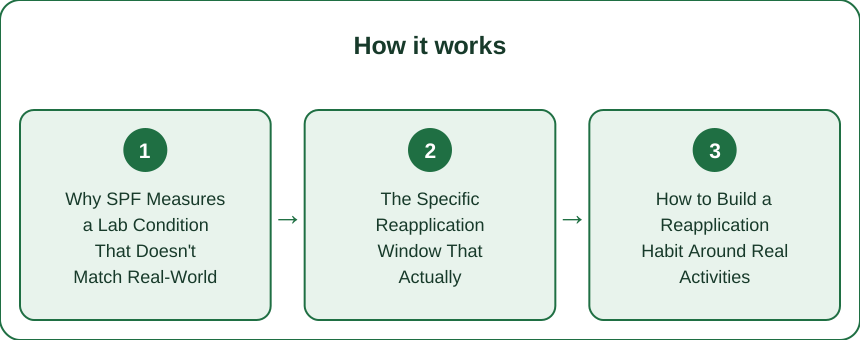
How to Build a Reapplication Habit Around Real Activities Instead of a Fixed Clock Alone
The practical habit: the set-a-reapplication-trigger-tied-to-specific-activities-like-after-every-swim-or-every-outdoor-break (the linking reapplication to natural activity transitions rather than only watching a clock — the tie-reapplication-to-activity-transitions), the the-keep-travel-sized-sunscreen-accessible-during-any-planned-outdoor-activity (the removing the friction of reapplying by having product immediately at hand — the keep-sunscreen-accessible-during-outdoor-plans), the the-combine-a-time-based-reminder-with-an-activity-based-one-for-full-day-events (the layering both triggers together for longer days that involve mixed activity and idle time — the combine-time-and-activity-triggers-for-full-days), and the frame (tying reapplication to activity transitions, keeping product accessible, and combining time-based and activity-based triggers for a full day outside — a habit built around real conditions rather than a single fixed-clock rule).
Buying a higher SPF sunscreen and assuming it means fewer reapplications misunderstands what SPF measures, since the rating comes from a controlled lab application at a thicker amount than most people actually use, and doesn’t account for sweat, water contact or rubbing against clothing over a real day — both high and low SPF products degrade at a similar rate once those real-world conditions kick in. The actual guidance is reapplying roughly every two hours regardless of SPF number during continuous sun exposure, and immediately after swimming or heavy sweating even if under two hours, since water-resistant labeling refers to a specific tested time window rather than permanent resistance. Build the habit around real activities by tying reapplication to natural transitions like after every swim, keeping travel-sized sunscreen accessible during any outdoor plans, and combining a time-based reminder with an activity-based one for longer days outside.
Keep Reading
This article is for general informational and styling purposes only. Fit, sizing, and product availability may vary.