Why Sunscreen Fails Fastest on the One Spot You Never Reapply
Quick Answer: Sun exposure is about angle, not effort. With the sun overhead, the tops of your ears, the back of your neck, and your hairline part receive close to full-intensity light while your cheeks receive it at a slant - so those spots burn first even when you applied properly. They are also the spots people skip at reapplication because they are out of sight in a mirror. Reapply by touch, not by looking.
You did not miss those spots because you were careless.
You missed them because a mirror only shows you the front of your head.

Why do the same few spots keep burning?
Because the sun’s angle decides the dose, and horizontal surfaces get the highest one.
A surface facing straight up receives the full intensity. The top of your ear, the top of your shoulder, and the flat part of your hairline part are all facing the sky between roughly 10am and 4pm. Your cheek, angled at maybe 45 degrees, receives a fraction of the same light - which is why the front of your face is rarely where the burn starts.
Hair does less than you think. A part line is a direct channel to the scalp, and fine or lifted hair transmits a surprising amount of light. Scalp burns are common in people who have never once considered their scalp.
The back of the neck gets it twice. Direct overhead sun, plus reflection off light-coloured clothing and pavement. A ponytail removes the one bit of shade that spot normally has.
And these are exactly the reapply blind spots. You reapply what you can see. Ears, neck, and part line are all behind the plane of a mirror, so they get one morning application and nothing more for eight hours.
Which turns a good routine into a partial one. The face you can see is protected all day; the head you cannot see is running on a coat applied before breakfast.
What does a complete pass actually cover?
A fixed order that includes everything, done by feel rather than by sight.
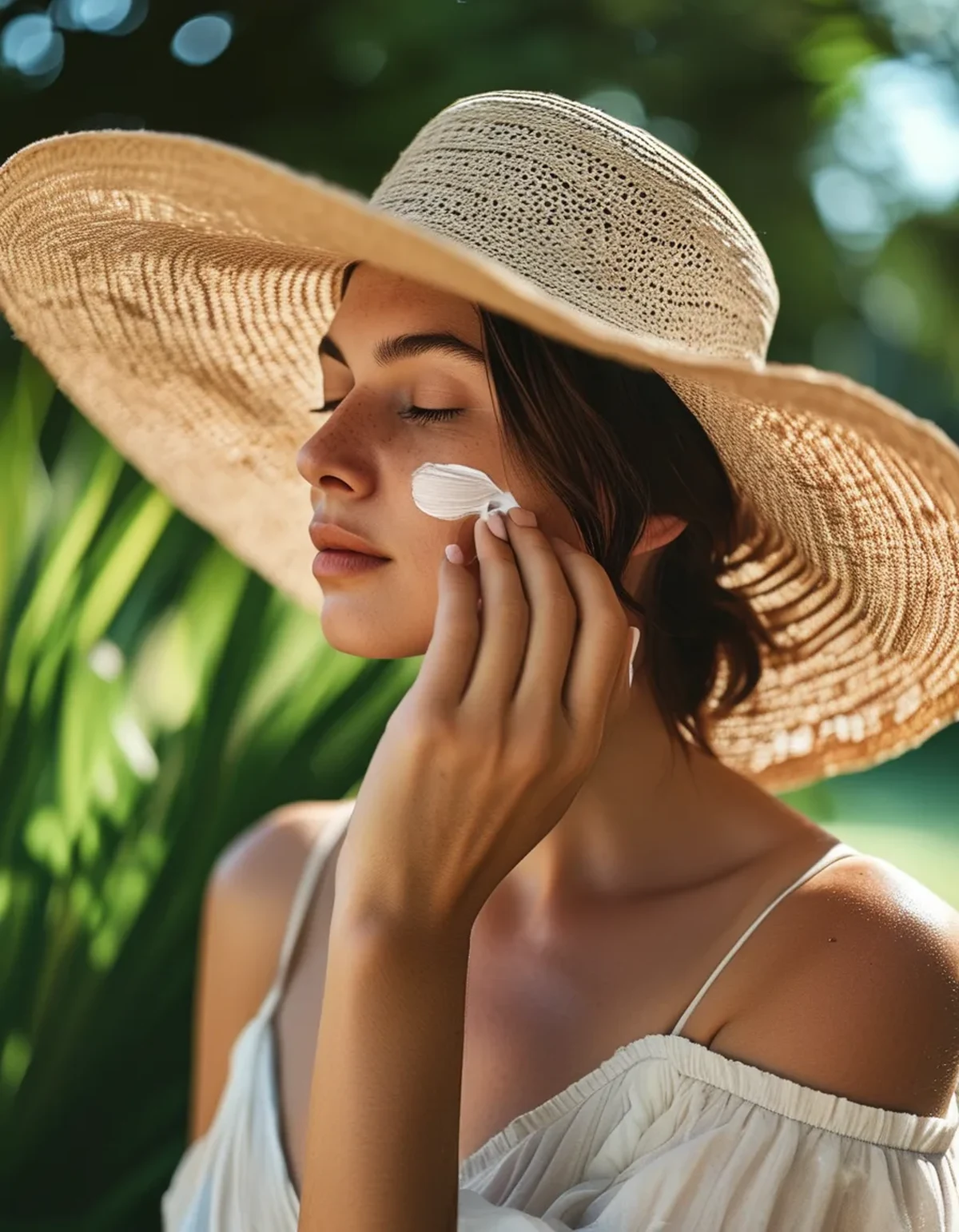
Start at the back and work forward. Back of neck, both ears including the rims and behind them, then hairline and part, then face. Starting where you can see means you stop before you reach where you cannot.
Use two fingers along the part line. A stick or a spray designed for scalp works better than a lotion here, because lotion in hair is unpleasant enough that people skip it the second time. The format you will actually reuse is the one that works.
Ears take more than you expect. The rim, the little ledge at the top, and the front of the earlobe - roughly a pea-sized amount for both, which is far more than the smear most people give them.
The neck needs the sides too. The strip in front of your ears down to the jaw and the sides of the neck burn readily and are almost never covered.
Set a two-hour reminder for outdoor days. Not for the face - for the back-of-head pass, which is the one that gets forgotten. Ninety seconds, done by touch.
And a hat solves most of it. A brim covers ears, part, and the front of the neck all at once. A hat plus one careful neck reapply beats a perfect facial routine for total protection.
What about the spots below the neck?
Same principle, different geography, and the same blind-spot problem.
Tops of the feet, if you wear anything open. These burn badly, blister easily, and are consistently missed - and a burn on the top of the foot makes shoes miserable for days.
The back of the hands. They get more cumulative sun than almost any other skin on the body and are washed several times a day, which removes whatever you applied. Reapply after washing your hands, not on a clock.
The strip where a sleeve moves. A t-shirt sleeve rides up during a walk and exposes a band of skin that was covered at application time. Apply as though you are wearing one size smaller.
Along the top of a sports bra strap. Straps shift, and the skin under the original strap position gets exposed within an hour of moving.
Behind the knees and the back of the calves, if you are walking away from the sun for any length of time. Easy to forget, and reflected light off pavement adds to it.
And the part in the middle of your back that you cannot reach. A spray, or a partner, or a shirt. There is no technique that solves this one - pick one of the three.
Myth vs Fact: Sun Exposure Edition
Myth: a cloudy day means you can skip it. Fact: a substantial share of UV passes through light cloud, and thin overcast can even scatter light so you receive it from more directions. Overcast days produce a lot of unexpected burns precisely because nobody feels warned.
Myth: you only burn when it is hot. Fact: heat is infrared, burn is UV, and they are not the same thing. A cool, breezy September afternoon can burn you faster than a still humid one because nothing tells you to seek shade.
Myth: sitting in the shade is complete protection. Fact: shade blocks direct light, but reflected UV off sand, water, concrete, and light walls is real. Shade cuts your dose substantially without eliminating it.
Myth: darker skin does not need sunscreen. Fact: more melanin means more baseline protection, not immunity - burns, cumulative damage, and hyperpigmentation all still occur. The routine changes in emphasis, not in whether it is needed.
Myth: one thick morning application lasts the day. Fact: sunscreen degrades with UV exposure, sweat, and simple contact with clothing and hands. Two hours is the working figure outdoors, and less if you are swimming or sweating.
Myth: makeup with SPF covers you. Fact: the SPF figure on a foundation assumes an application thickness nobody uses on their face. Treat it as a bonus, not as your protection, and apply an actual sunscreen underneath. If you have a history of skin cancer or a spot that is changing, that is a conversation for a dermatologist. This is general information, not medical advice.
FAQ: Missed-Spot Questions, Answered
How do I do my scalp without greasy hair?
Use a powder or a stick formula along the part, or simply wear a hat on high-sun days. Powder SPF is the format most people will actually reapply, which matters more than its slightly lower real-world coverage.
Does one bad burn on my ears matter?
Ears and the back of the neck are among the more common sites for sun damage over a lifetime, largely because of exactly this reapplication blind spot. Repeated small burns in one spot are the pattern that matters, not a single incident.
Is spray sunscreen good enough for the back of the neck?
It is, if you spray until the skin looks visibly wet and then rub it in. Spraying from a distance and walking away applies far less than the label assumes. For hard-to-reach areas, spray into your hand first and apply by feel.
TL;DR:
- Upward-facing surfaces get the highest dose: tops of ears, hairline part, back of neck, tops of feet.
- You skip them because a mirror does not show them - reapply by touch in a fixed order, back to front.
- Ears need about a pea-sized amount for the pair, including rims and behind.
- A brimmed hat covers three blind spots at once and is the highest-value single change.
- Reapply hands after washing, not on a timer - washing removes what you put on.
On your next outdoor day, set one two-hour reminder labelled ears and neck. That is the pass that never happens otherwise.
Keep Reading
This article is for general informational and styling purposes only. Fit, sizing, and product availability may vary.