Why Sunscreen Stings Your Eyes Specifically During Workouts, Even the 'Gentle' Kind
Quick Answer: Sweat picks up sunscreen’s active ingredients and chemical filters from the forehead and carries them down into the eyes in a more concentrated, mobile form than the product experiences sitting still on skin, which is why even sunscreens marketed as gentle can sting significantly once a workout gets sweaty.
Applied calmly at home, it felt completely fine. Twenty minutes into a run, it’s suddenly running straight into the eyes and stinging.

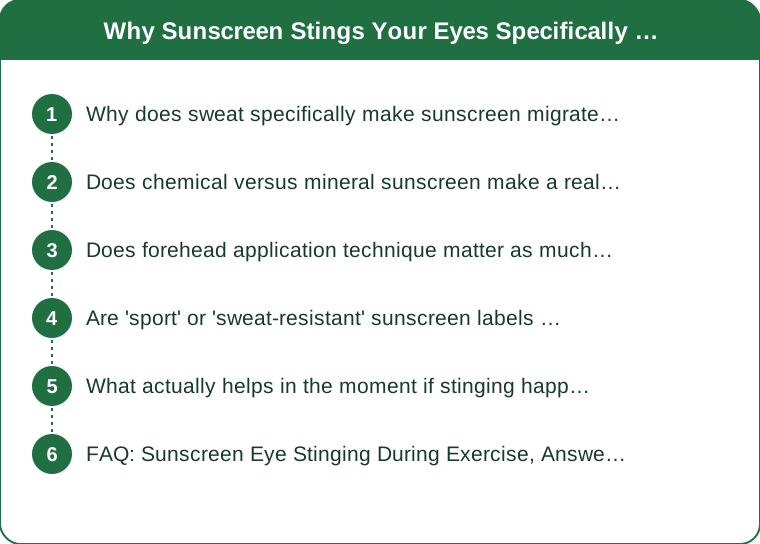
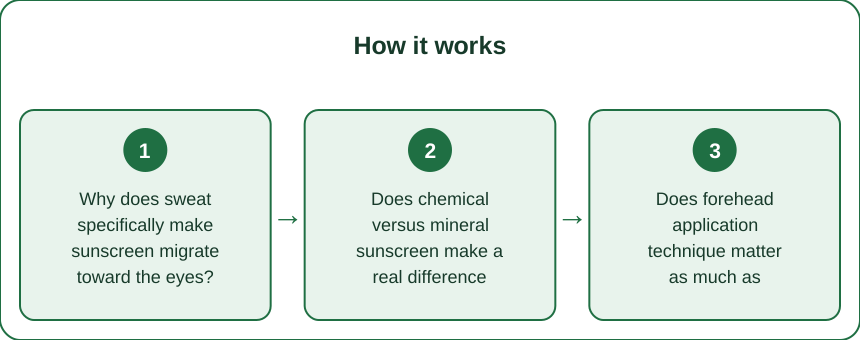
Why does sweat specifically make sunscreen migrate toward the eyes?
Sweat is a liquid that physically dissolves and carries surface product with it as it runs down the forehead, and gravity combined with sweat volume during exercise moves considerably more product toward the eye area than would ever happen with skin sitting still. The sunscreen isn’t becoming more irritating chemically — it’s being physically relocated to a much more sensitive area in a more concentrated, mobile form.
Does chemical versus mineral sunscreen make a real difference for this specific issue?
Often yes — chemical sunscreen filters tend to be more likely to cause stinging on contact with the eye’s mucous membrane compared to mineral filters like zinc oxide or titanium dioxide, which sit more inertly on the skin surface, so workout-specific mineral formulations are commonly recommended specifically for this sweat-migration issue.
Does forehead application technique matter as much as formula choice?
Considerably — applying a thicker layer directly along the hairline and brow bone (where sweat naturally channels downward first) gives sweat more product to carry toward the eyes, while a thinner, more evenly blended application in that specific zone, combined with a sweatband to intercept runoff, meaningfully reduces how much product actually reaches the eyes.

Are ‘sport’ or ‘sweat-resistant’ sunscreen labels actually addressing this specific problem?
Partly — sweat-resistant labeling primarily addresses how well the sunscreen stays on skin and maintains SPF protection during sweating, which is a related but distinct claim from being specifically formulated to not sting if it does reach the eyes, so checking for an explicit “won’t sting eyes” or ophthalmologist-tested claim is more directly relevant to this specific complaint.
What actually helps in the moment if stinging happens mid-workout?
Flushing the eye with clean water as soon as possible dilutes and removes the irritant most effectively, and a sweatband or hat brim worn specifically to intercept forehead sweat before it reaches the eyes addresses the problem preventively for future sessions rather than only reactively managing it once it starts.
FAQ: Sunscreen Eye Stinging During Exercise, Answered
Is mineral sunscreen automatically completely non-stinging?
Not completely — it’s generally less likely to sting than chemical formulas, but any product reaching the eye in sweat-diluted form can still cause some irritation, so it’s a meaningful improvement rather than a total guarantee.
Does applying sunscreen well before a workout instead of right before help?
Somewhat — giving sunscreen time to fully absorb and set before heavy sweating begins can reduce how much loose product is available for sweat to pick up and carry.
Should sunscreen near the eyes be skipped entirely for workouts?
Not recommended, since the eye area and eyelids are still sun-exposed and benefit from protection; choosing a specifically eye-area-safe formula is a better solution than skipping protection in that zone altogether.
TL;DR:
- Sweat physically carries sunscreen down into the eyes in a concentrated, mobile form
- The product isn’t more irritating during workouts — it’s just being relocated by sweat
- Mineral sunscreen filters generally sting less than chemical filters if they reach the eyes
- Thinner application at the hairline plus a sweatband reduces how much product migrates
- Sweat-resistant labeling addresses staying power more than it addresses eye-sting risk specifically
The sting is a delivery problem caused by sweat, not proof the sunscreen itself is too harsh.
Keep Reading
This article is for general informational and styling purposes only. Fit, sizing, and product availability may vary.