Why You're Probably Using a Quarter of the Sunscreen You Need
Quick Answer: SPF ratings are determined at 2 mg of product per square centimeter of skin. Studies of real-world use consistently find people apply roughly 20 to 50 percent of that. Because protection doesn’t scale linearly, applying half the tested amount gives substantially less than half the labeled SPF. Applying more of a moderate SPF beats applying too little of a high one.
You bought SPF 50 and you still burned. The product probably worked exactly as tested — you just weren’t wearing SPF 50.
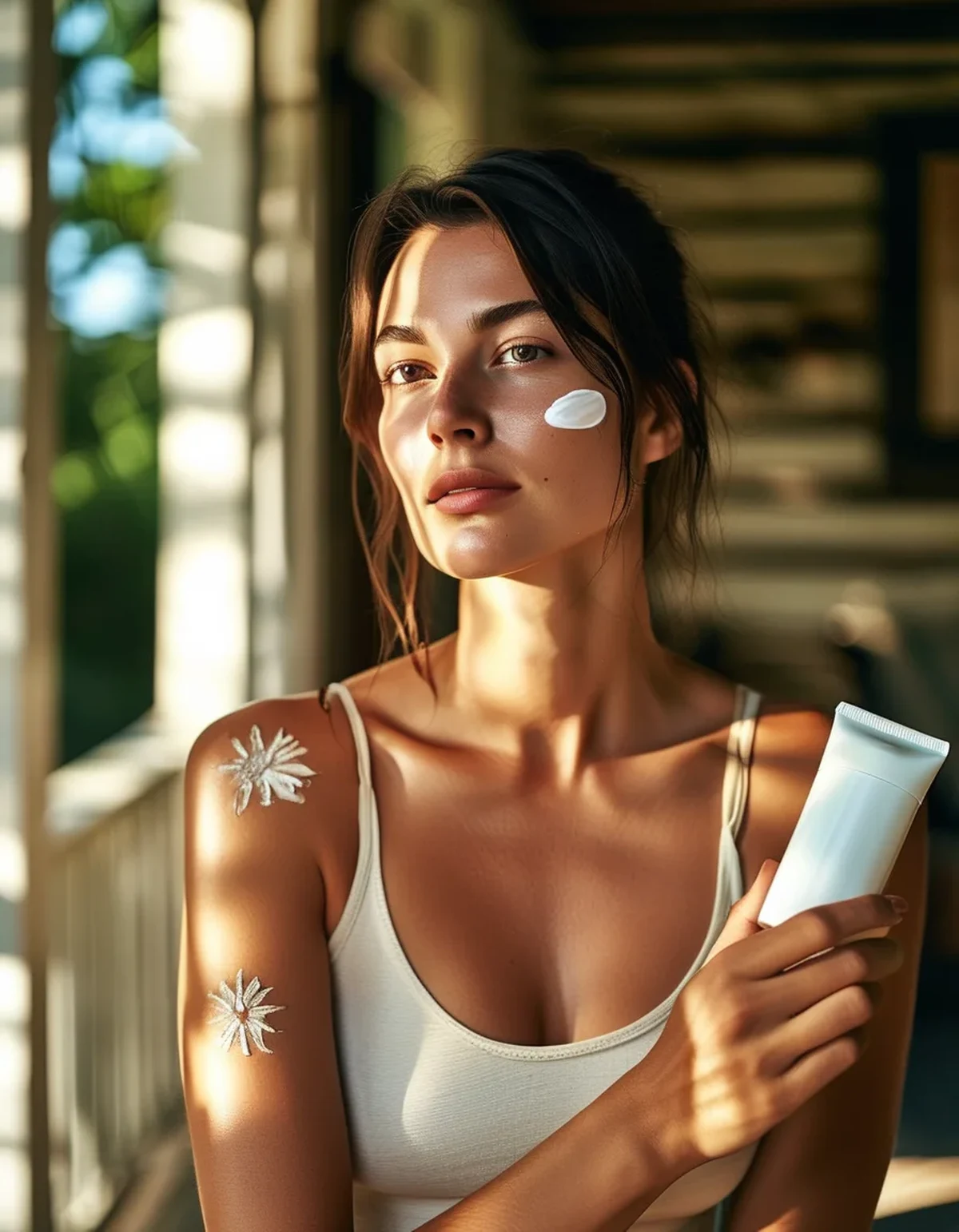
How much sunscreen are you supposed to use?
The testing standard is 2 milligrams per square centimeter of skin, and translating that into something usable is where most guidance falls down.
For an average adult in swimwear, that works out to roughly 30 to 35 milliliters for full body coverage — about a shot glass, or a third of a standard 100ml tube per application.
For the face and neck alone: about 1/4 teaspoon, or the commonly cited two-finger rule — a line of product along the length of your index and middle fingers.
Multiple studies of consumer application have found typical use somewhere between 0.5 and 1.0 mg/cm², which is a quarter to a half of the tested amount.
Why this matters more than it sounds: the relationship between quantity applied and protection achieved isn’t linear. Applying half the tested amount does not give you half the SPF — the reduction is steeper than that. Research on this has found that under-application can reduce effective protection dramatically, with SPF 50 performing closer to low-teens numbers at typical real-world application rates.
This is general information, not medical advice.
Does higher SPF make up for using less?
Not reliably, and this is the most useful practical finding in the whole topic.
The marginal benefit of higher SPF numbers shrinks quickly. SPF 15 blocks roughly 93 percent of UVB, SPF 30 about 97 percent, SPF 50 about 98 percent. The jump from 30 to 50 is about one percentage point of additional blocking.
But the penalty for under-application applies to every product equally. Half-applying SPF 50 doesn’t leave you with SPF 25 — the drop is steeper. So the strategy of buying a higher number to compensate for thin application doesn’t work the way people hope.
What actually improves outcomes:
- Applying the correct amount of any broad-spectrum SPF 30+
- Reapplying every two hours, and immediately after swimming or heavy sweating
- Not skipping the commonly missed areas
Where higher SPF genuinely helps: people with photosensitivity, those on photosensitizing medication, at high altitude, near snow or water, and anyone who knows they under-apply and can’t change that. In those cases the buffer is worth having.
But for the average sunny day, a well-applied SPF 30 outperforms a thinly applied SPF 50.
Myth vs Fact: Sunscreen
Myth: You don’t need sunscreen on cloudy days. Fact: A significant portion of UV penetrates cloud cover. Overcast days can still deliver substantial UV exposure, and people burn on them regularly precisely because they weren’t expecting to.
Myth: Makeup with SPF is enough. Fact: Reaching the labeled SPF from a foundation would require applying far more foundation than anyone does — estimates suggest several times a normal application. Treat SPF in makeup as a bonus, not the layer.
Myth: Water-resistant means waterproof. Fact: Water-resistant claims are tested for either 40 or 80 minutes of water immersion. After that, reapplication is required regardless of the label. Towel drying removes product mechanically and requires reapplication too.
Myth: Mineral sunscreen works instantly and chemical needs 20 minutes. Fact: Mineral filters do work on contact, but both types benefit from applying before going out, since it takes time to spread evenly and settle into an even film. Twenty minutes before exposure is reasonable advice for both.
Myth: A high SPF means you can stay out all day. Fact: No SPF eliminates the need for reapplication. Product degrades, rubs off on clothing, and is removed by sweat. Two hours is the standard interval and it doesn’t extend with a higher number.
Myth: Darker skin doesn’t need sunscreen. Fact: More melanin provides some baseline protection but not immunity. Skin cancer in darker skin tones is frequently diagnosed later and outcomes are correspondingly worse, which makes protection and skin checks more important, not less.
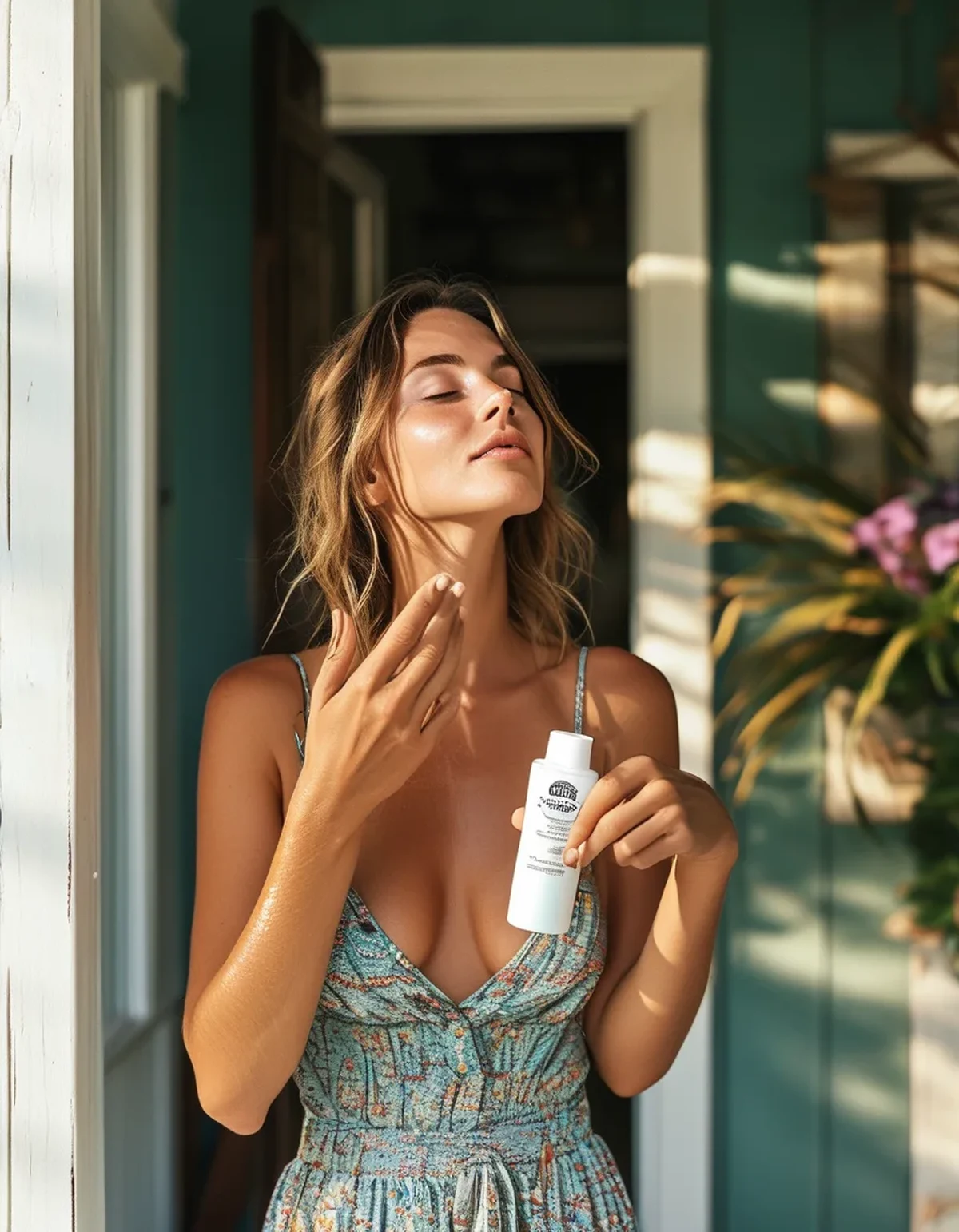
Which areas do people miss most?
The pattern is consistent across studies and easy to correct once you know it.
The most-missed areas:
- Ears, especially the upper rim and behind them
- The eyelid area — one of the most common sites for skin cancers, and the area people avoid because of stinging. A mineral stick formulation solves this.
- The scalp part line — a genuinely high-exposure area that almost nobody covers. A powder SPF, a spray, or a hat.
- The back of the neck, particularly with hair up
- The tops of the feet, in sandals
- The lips — no melanin protection, and lip balm with SPF is the only practical option
- Hands, which get sun exposure daily and show it earliest
The hairline and the sides of the face get thin coverage because application tends to fade out at the edges of the face rather than continuing onto the scalp and jawline.
A systematic order helps: face, ears, neck front and back, chest, shoulders, arms, hands, then lower body. Working in a fixed sequence catches the edges that ad-hoc application misses.
And on reapplication over makeup — a powder or spray SPF is the practical answer. It’s not equivalent to a full reapplication, but it’s substantially better than skipping it, which is the realistic alternative.
How do you actually build a routine that sticks?
Make it require fewer decisions and less product-per-moment.
Separate face and body products. The main reason people under-apply on the face is that body sunscreen feels heavy there. A face-specific formulation you genuinely like the texture of will get applied at the right thickness; one you tolerate will get applied thinly.
Use the two-finger rule for the face every time, so quantity stops being a judgment call.
Keep a stick in the bag and one in the car. Reapplication happens when the product is within reach, and doesn’t when it’s at home.
Layer with clothing rather than relying on sunscreen alone. A UPF-rated long sleeve or a wide-brim hat provides consistent protection that doesn’t degrade or require reapplication. For long outdoor days, this is far more reliable than any application discipline.
Set a reminder for the two-hour mark on beach or hiking days. Everybody intends to reapply and almost nobody tracks the time.
Choose a formulation you’d wear daily. The best sunscreen by every measure is the one you use in the correct amount consistently. Texture preference isn’t vanity here — it’s the main determinant of whether the product does anything at all.
This is general information, not medical advice. For specific skin concerns, photosensitivity, or a history of skin cancer, consult a dermatologist.
FAQ: Sunscreen Questions, Answered
Does sunscreen expire?
Yes. Most are stable for about three years from manufacture, and products are required to be formulated to maintain strength until their expiration date. Heat degrades them faster, so a tube that’s spent two summers in a hot car is less reliable than the date suggests.
Is spray sunscreen as effective as lotion?
It can be, but reaching adequate thickness with a spray is harder — a common recommendation is to spray until the skin glistens and then rub it in. Wind reduces how much lands on you. Sprays are excellent for reapplication over existing coverage and less reliable as the only application.
Do I need sunscreen indoors or in the car?
UVA passes through window glass, UVB largely doesn’t. So a window seat on a long drive or a desk beside a sunny window is meaningful UVA exposure. For most indoor days it’s a minor consideration; for long drives it’s worth applying.
TL;DR:
- SPF is tested at 2 mg/cm²; most people apply a quarter to a half of that.
- Under-application costs more protection than the numbers suggest — well-applied SPF 30 beats thin SPF 50.
- Ears, eyelids, scalp part line, neck, and tops of feet are the consistently missed areas.
- Reapply every two hours; clothing and hats provide protection that doesn’t degrade.
Use the two-finger rule on your face, a shot glass for your body, and stop paying for numbers you’re not actually wearing.
Keep Reading
This article is for general informational and styling purposes only. Fit, sizing, and product availability may vary.